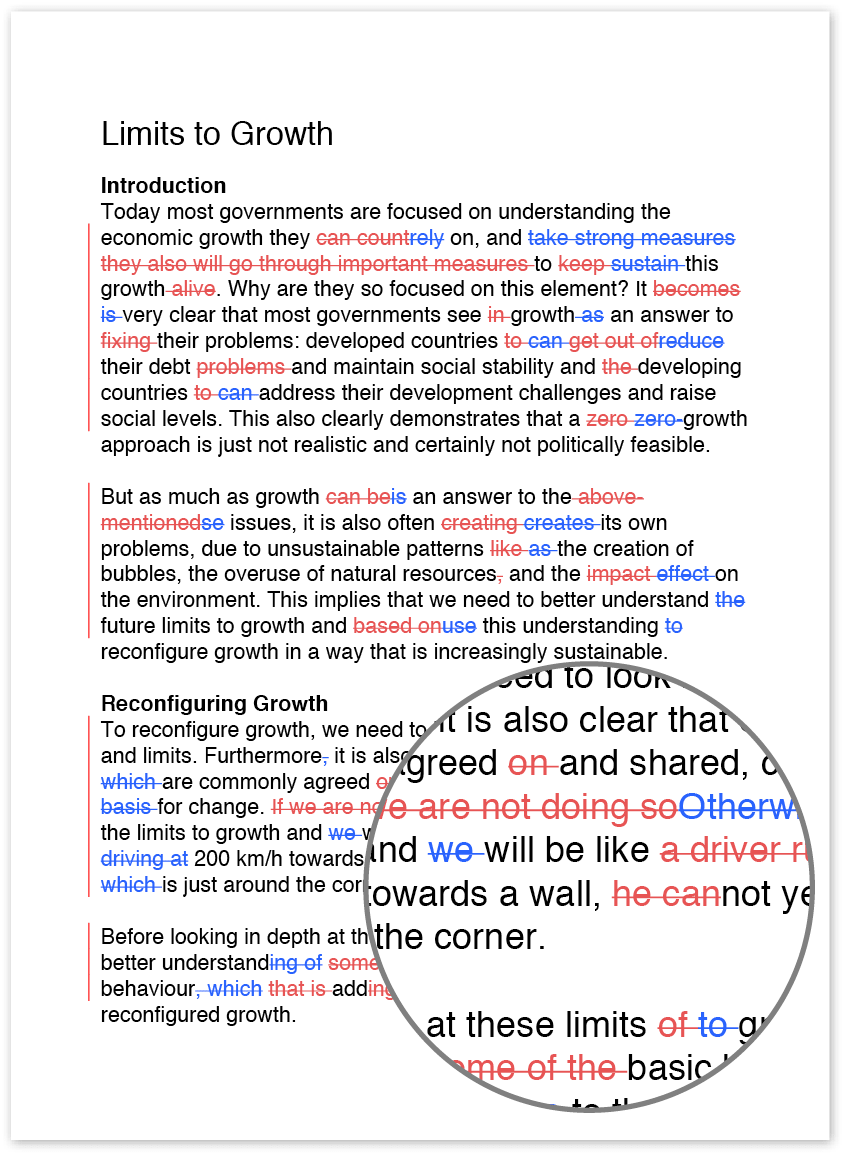

Tips on writing academic English
When you’re writing an academic journal article, a dissertation, an essay or a report, it’s important to use a more formal writing style than what you’d use to write something like an email or a short story. This formal style is known as academic writing, and it’s important because it helps make your text clear, direct, and understandable. It also adds a layer of professionalism to your writing, which may encourage your audience to view your arguments more seriously. Here are a few Academic English writing tips focusing on grammar and style that will help make your academic writing shine.
Don’t use contractions, slang or jargon
Although we normally use contractions and slang in our everyday conversations and we may use jargon when we talk to people with expertise in our fields, using them in academic English writing is frowned upon. Contractions and slang make your writing sound too informal, and jargon can be difficult for laypeople to make sense of. If you need to use a term that’s only used in your field, make sure you define it on first use so readers will know what it means.
Only capitalise proper nouns
Although it may be tempting to capitalise the name of a theory or other important terms in your paper, remember that only proper nouns (i.e. the names of people, specific places or things, such as the names of newspapers, schools, movies or companies) are capitalised when writing academic English. Common nouns, such as things that refer to a general thing, concept or idea, are not capitalised. Therefore, you wouldn’t capitalise ‘the theory of relativity’, ‘bachelor’s degree’ or ‘website’. Furthermore, when you use an abbreviation, such as ‘ADHD’, you should always provide the full term on the first use; however, just because you’re providing an abbreviation that uses capital letters, that doesn’t mean you need to capitalise the term. For this example, you’d write ‘attention deficit/hyperactivity disorder (ADHD)’ in your text. If you’re ever in doubt about whether a term should be capitalised, check a dictionary or your preferred style guide to determine the correct format.
Make your writing direct and precise
As you write, remember to eliminate unnecessary words and use clear, direct language. Although academic English writing should be formal, it does not have to be overly wordy or complex; writing that’s too complex will make it harder for your audience to determine your meaning, which then makes it harder for them to understand your arguments. Don’t go too far in the other direction, though, and make all your sentences short and too simple. Very short sentences can make your text sound choppy, which will distract your readers.
Avoid using generalisations, hyperbole or gendered language
In your text, remember that your aim is to objectively present the facts you have discovered in your research and make sound arguments based on those facts. Therefore, you should avoid using vast generalisations (e.g. ‘All people who experience this symptom have this disease’) or hyperbole (e.g. ‘This finding is the most important finding in the history of this field’). Since your work cannot have information from every researcher or every person affected by your topic, it is impossible to make such statements. Likewise, you should avoid using gendered language to make your work more accessible to readers. Instead of using the word ‘policeman’ or ‘businessmen’ or referring to all doctors as ‘he’, use ‘police officers’ and ‘business people’ and refer to doctors as ‘they’.
Use the correct verb tense
When you are describing work that you have already completed or that other researchers have conducted, use the past tense (e.g. ‘Smith and Jones found that…’). If you are describing work that you will conduct in the future, use the future tense (e.g. ‘In this study, our team will examine…’).
Determine whether you should use ‘I’ or ‘we’
Some instructors, reviewers and style guides prefer that authors avoid using ‘I’ and ‘we’ in academic English writing, although others do not have a restriction on such a format. Before you begin writing, check with your instructor, preferred journal, etc., to determine if they have specified whether it is ok to use such language.
Make sure you structure your sentences and paragraphs correctly
Every sentence you write must be a complete sentence with a subject and a predicate. The subject refers to what or whom the sentence is about, and the predicate describes what the subject is doing, having done to them, etc. Without both parts, a sentence is incomplete and your readers can’t determine your meaning. Likewise, avoid using run-on sentences with too many subjects and predicates since they are very hard for readers to decipher. If you’re having trouble figuring out whether your sentences are complete or if they’re too long, try reading them out loud as you would in a normal conversation. This can help you determine where breaks should be for long sentences and quickly recognise incomplete sentences.
Make sure each paragraph focuses on one main idea instead of multiple unconnected ideas. Presenting unconnected ideas in the same paragraph will confuse and distract your readers.