
Writing an academic dissertation
Your dissertation might be the longest, most complex document you ever write. Add in the stress that comes from completing a dissertation on time and knowing that you must defend it, and it’s not hard to see why dissertations can cause anxiety among students. However, by thinking ahead, documenting your research, and persevering, you can complete your dissertation without subjecting yourself to high stress levels.
The dissertation process is long and involved, and by the time you start writing the bulk of your work, you should have already had a number of conversations with your chair regarding the scope of your work and the progress you have made in your research.
Make sure you stay in contact with your chair as you write; he or she will be a good source of knowledge if any questions or issues arise. As you begin writing your dissertation, make sure you follow any guides your institution provides. These guides often cover topics such as formatting, layout, and what types of information to include.
As with other types of academic papers, you can follow four steps to ensure that you complete your dissertation on time and with a minimal amount of stress:
- Gather your research
- Develop an outline
- Write your draft
- Edit your work
Gather your research
At the beginning of your dissertation journey, you developed a thesis statement or research questions to guide your examination of your chosen topic. As you conduct your research and review the literature relating to your topic, take copious notes and write out what you can. When you are ready to start writing in earnest, begin by going through your notes, printed materials, and previously written sections to organize them and ensure that you have complete bibliographic information for all your sources. If you conducted your own studies, gather all your data and ensure that you have everything you need. You don’t want to get to a crucial section and then discover that you’re missing a vital piece of data.
Develop an outline
Before you begin writing in earnest, take some time to think about how your dissertation will be organized. Most institutions require some specific chapters; these usually include the introduction, literature review, methods, results, discussion, and conclusions. Make sure you include headings for all required chapters in your outline. Once you know what chapters you are required to include, make some quick notes under each chapter heading regarding the information you will include in each one.
Your introduction should present your research questions or thesis statement, your hypotheses, and background information on your topic so your readers understand why your research is important. In the literature review, you will summarize the findings and ideas of others who have studied the same topic, relating them to your field of study and providing more background information for your work.
Your methods chapter will describe your work, such as how you designed any surveys you performed; how you conducted sampling, experiments, or field observations; how you found other literature you reviewed, etc. In the results and discussions chapter(s), you will describe your results and discuss their importance and what they indicate in terms of your research questions. Finally, your conclusion sums up your work, presents any limitations, and discusses any future research needs.
Write your draft
As with other academic works, remember to use formal academic language as you write. Don’t use contractions, slang, or jargon; try to use active voice instead of passive voice; and make sure your work is clear and concise. Make sure you define any terms that readers may not be familiar with, spell out acronyms on first use, and avoid using gendered language (e.g., use “he or she” instead of just “he” or “she”). If you need guidance on how to use formal academic writing, check with your institution’s writing department to see if the staff there have any useful resources.
The methods chapter
Many students find it easiest to begin writing the methods chapter first. You should already have a complete record of your research procedures, so you can begin by simply writing them up in a narrative form. Generally, most institutions require that this chapter be written in the past tense (i.e., you are describing what you already did, not what you will do in the future or what you are presently doing). Make sure you describe all your procedures fully.
The results section
After the methods chapter is complete, most people find it easiest to move on to the results section. Again, you should have all this data on hand, so it shouldn’t be hard to write up what you discovered. Make sure you fully describe your results; you don’t want readers to be unclear on any of your findings.
The discussion section
Next, it’s often best to move straight into the discussion section. In the results section, you presented what you found. Now, it’s time to explain why those findings are important to your field. Describe what those findings mean in terms of your research question, noting any particularly interesting or surprising findings. Concentrate on using your findings to answer your research question or to prove your thesis statement.
The literature review
Next, many people find it best to write the literature review (although some may prefer to write it first, before the methods section). Here you will sum up all the findings you discovered from other studies and researchers, concentrating on those findings that are relevant to your work. Avoid presenting findings that don’t tie into your work in some way; that will merely confuse your reader. Make sure you provide accurate, full citations for all the work that you refer to in this chapter!
The introduction
Once you have completed your methods, results, discussion, and literature review chapters, go back and write up your introduction. This chapter should provide some background information on your research question so readers know why you wanted to study that topic. Now that you have your methods, results, and discussion written, you can easily summarize your work to describe what you did and your important findings to set the stage for the rest of your dissertation.
The conclusion chapter
After you have completed your introduction, move on to the conclusion chapter. Again, you can summarize your work to demonstrate its importance to your field and tie it to the work of other researchers. Discuss any limitations (e.g., sample size, bias, access to information) so your readers have a complete picture of your work and how you conducted your research. Often, you can provide recommendations for future research based on the limitations you faced (e.g., conducting a study with a larger sample; using other research methods to decrease bias).
The reference list
Finally, create your reference list and provide any supplemental information necessary (e.g., appendices). As you create your references and other supplemental information, make sure you follow the style guide provided by your institution. Two of the most common style guides are APA and Chicago, but your dissertation guidelines may call for other special formatting requirements.
Edit your dissertation
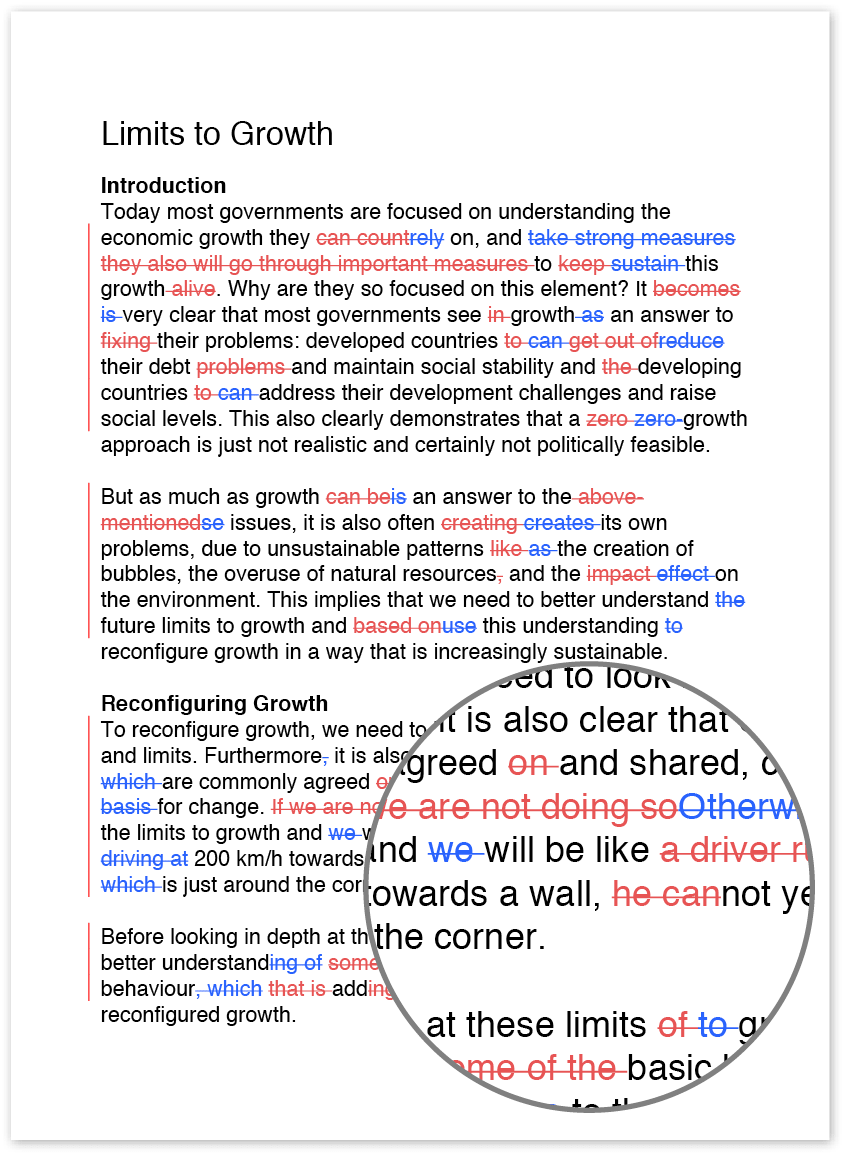
You don’t want to turn in work that is riddled with spelling, grammar, or formatting errors. As much as you may be tired of looking at your dissertation, it’s vital that you read through it a few more times to ensure that you have presented all the information you need to present, that you haven’t included anything that isn’t relevant, and that your work is formatted correctly and error free.
It’s often helpful to find someone (either a friend or a professional editor) to go through and check for errors too. As we all know, after you’ve looked at something long enough, you start missing things. You’ve put all this work into creating an outstanding dissertation; it’s worth the extra effort to make sure your work is the best it can be.
Read more
Dissertation proofreading service by Wordy®